Industry workflows
Drone operations for Public Safety
Support authorized agencies and qualified teams with coordination and record context.
This updated guide is currently available in English.

Public Safety: operational needs
Nothing on this page implies emergency authority, public-safety authorization, priority access, or permission to operate.
- Agency authorization
- Incident coordination
- Records and retention
Preparation for an authorized agency operation
AI streamlines preparation, coordination and delivery so your team can produce consistent results with less manual work.
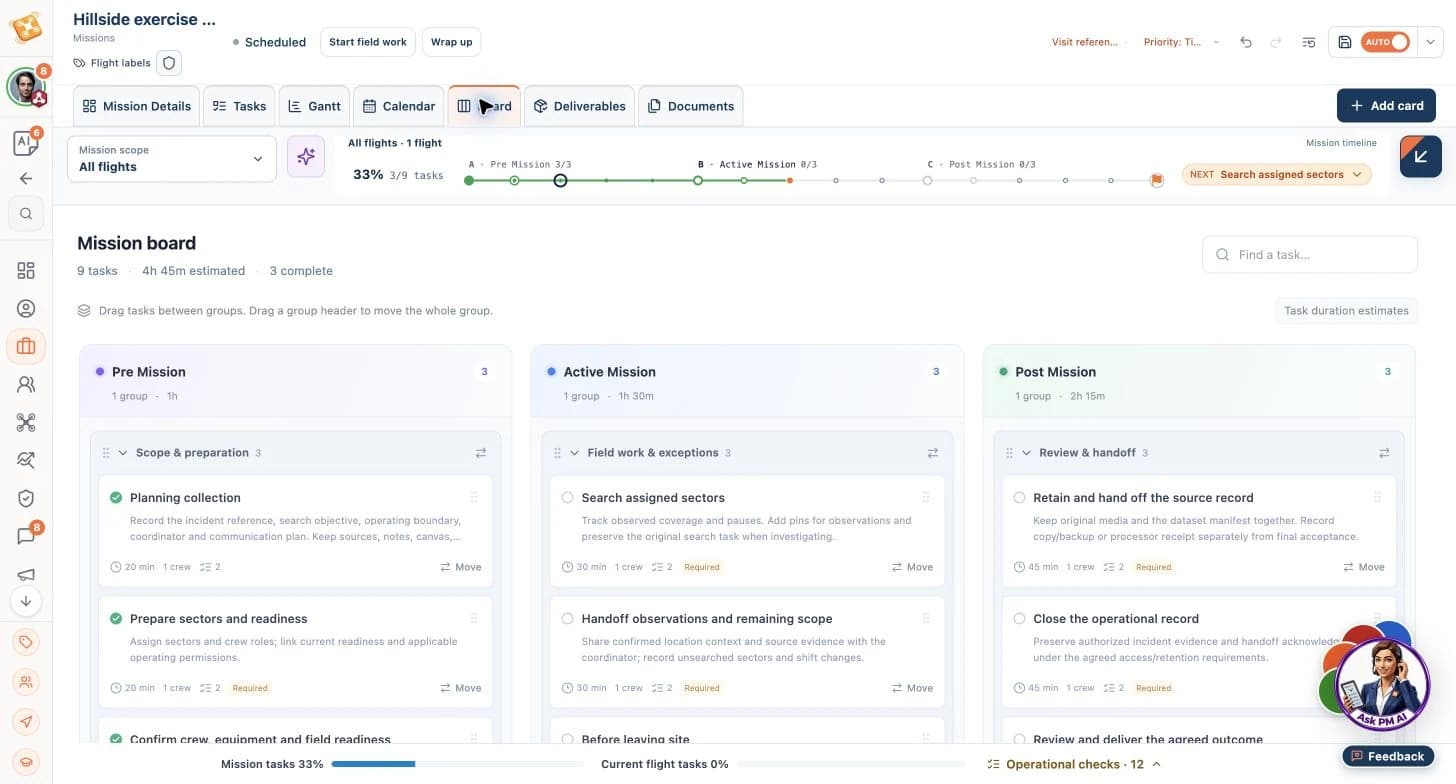
AI coordinates coverage, roles and evidence handoffs, helping authorized teams respond to changing priorities while command retains critical decisions.
A IA avança o trabalho rotineiro para sua equipe se concentrar em decisões de maior valor.
Public Safety · mission workflow
Define agency authority, command roles, permitted data and the operating area before considering a capture task. Review coordination and retention requirements through the agency’s established systems.
- Your decision
- No. The agency and qualified operators establish authority, permissions and incident-specific controls.
- Expected output
- An agency-defined scope, accountable review roles and an evidence-retention plan; no live incident data is shown here.
Read the workflow guide and decision points
AI coordinates routine work; your team owns critical decisions.
Public Safety · mission workflow
Define agency authority, command roles, permitted data and the operating area before considering a capture task. Review coordination and retention requirements through the agency’s established systems.
Prepare the operation
- Input
- Support authorized agencies and qualified teams with coordination and record context.
- Product or agent contribution
- AI connects mission priorities, team readiness and authorized evidence handoffs, reducing coordination load while command retains critical operational decisions.
Resulting output
A reviewed scope, readiness questions and capture requirements.
Review and deliver
- Input
- The capture evidence and agreed review standard.
- Product or agent contribution
- AI organizes capture requirements and processing handoffs, keeping review tasks and delivery progress connected across your tools.
Resulting output
An agency-defined scope, accountable review roles and an evidence-retention plan; no live incident data is shown here.
Resources for this operating context
2 relevant entries in the curated collection: 1 core workflow and 1 worked example. Start with these previews.
Choose a workflow by its intended scope and expected output. Worked examples illustrate specific situations; adapt them to your operation and qualified review requirements.
Incident Observation & Search Support
Maintain a clear record of searched sectors, observations and remaining work as crews and priorities change. Use the prepared workflow to organize task context and handoff follow-ups, reducing coordination burden while the incident coordinator directs the response.
Core workflow
Preview workflowRemote Operations Handoff Exercise
Rehearse command-center and field responsibilities through connection loss, takeover and debrief without launching a live incident response. Use this example to organize exercise steps and unresolved actions, reducing training coordination while people verify authority and acknowledge each handoff.
Worked example
Preview workflowAgency data and access requirements
Define restricted data, review roles and the operating authority for an agency program.
ExploreQualified readiness review
Organize current regulatory and permission questions for the responsible agency personnel.
ExploreOperator evidence
Review professional identity and qualification information before assigning work.
Explore
Worked examples illustrate workflows, not customer endorsements. Processing, technical interpretation and critical operating decisions remain with the responsible people and tools.
Carry your industry into your first step
Explore authored mission templates relevant to Public Safety, including capture instructions, expected evidence and review requirements.